Your Car Has More Computers Than You Think. Who's Checking Them?
Modern vehicles rely on dozens of electronic systems. Here's why a check-engine light doesn't tell the whole story.
Your Car Has More Computers Than You Think. Who's Checking Them?
Modern vehicles rely on dozens of electronic systems. Here's why a check-engine light doesn't tell the whole story.
When most people think about a car's computer, they picture the system that controls the engine and turns on the check-engine light when something goes wrong.
But today's vehicles are far more sophisticated than that.
Your car may have dozens of individual computers working together to control everything from engine performance and transmission shifting to braking, steering, climate control, and advanced safety features.
These computers communicate constantly, sharing information to help your vehicle operate safely and efficiently.
Here's what might surprise you: Your vehicle can have problems stored in its computer systems without ever turning on the check-engine light.
At Next Gen Auto Care in Londonderry, NH, we believe understanding what's happening inside your vehicle is an important part of keeping it safe, reliable, and performing as designed.
How Many Computers Does a Modern Car Have?
Depending on its age, manufacturer, and equipment, a modern vehicle can have dozens of electronic control modules, sometimes referred to as ECUs.
Each module has a particular responsibility. Some operate independently, while others rely on information received from additional systems.
For example, modern vehicles may have computers responsible for:
- Engine Management: Controls fuel delivery, ignition timing, emissions, and engine performance.
- Transmission: Monitors and manages shifting, transmission operation, and related functions.
- Anti-Lock Brakes (ABS): Helps prevent wheel lockup during hard braking.
- Electronic Stability Control: Helps the driver maintain control when the vehicle begins to lose traction.
- Airbags and Occupant Safety: Monitors crash sensors, seat belt systems, and other components involved in occupant protection.
- Steering: Controls or monitors electric power steering and related systems.
- Climate Control: Manages heating, air conditioning, airflow, and temperature.
- Body Electronics: Controls features such as lighting, power windows, door locks, and other electrical equipment.
- Advanced Driver Assistance Systems (ADAS): Supports features including automatic emergency braking, blind-spot monitoring, lane-keeping assistance, and adaptive cruise control.
In many cases, these computers depend on one another.
A problem with one system can sometimes affect the operation of several others.
That's why diagnosing today's vehicles requires more than simply finding a trouble code and replacing a part.
Can a Car Have Computer Problems Without a Check-Engine Light?
Yes. A vehicle can have stored diagnostic trouble codes, communication problems, or electronic system faults without illuminating the check-engine light.
The check-engine light primarily alerts drivers to certain engine, emissions, and powertrain-related concerns.
Other vehicle systems have their own warning indicators, and some stored faults do not immediately trigger a dashboard warning.
For example, a vehicle may have:
- An intermittent communication problem between control modules.
- A stored fault in a door, seat, or body control system.
- A malfunction in a driver-assistance feature.
- An electrical problem that occurs only under certain conditions.
- A historical fault related to a low-voltage battery event.
Not every stored code represents a current failure or requires repair. Some may be historical, intermittent, or related to a condition that has already been corrected.
The important part is knowing how to interpret that information.
A vehicle with no warning lights isn't necessarily free of electronic concerns. And a stored code doesn't automatically mean something needs to be replaced.
What's the Difference Between a Basic Code Reader and a Comprehensive Vehicle Scan?
Many drivers have seen inexpensive code readers available at auto parts stores or online.
These tools can be useful for retrieving certain diagnostic trouble codes, especially those related to the engine and emissions systems.
But there is an important distinction between reading a check-engine code and evaluating a vehicle's complete electronic system.
A basic OBD-II code reader typically focuses on standardized emissions-related diagnostic information.
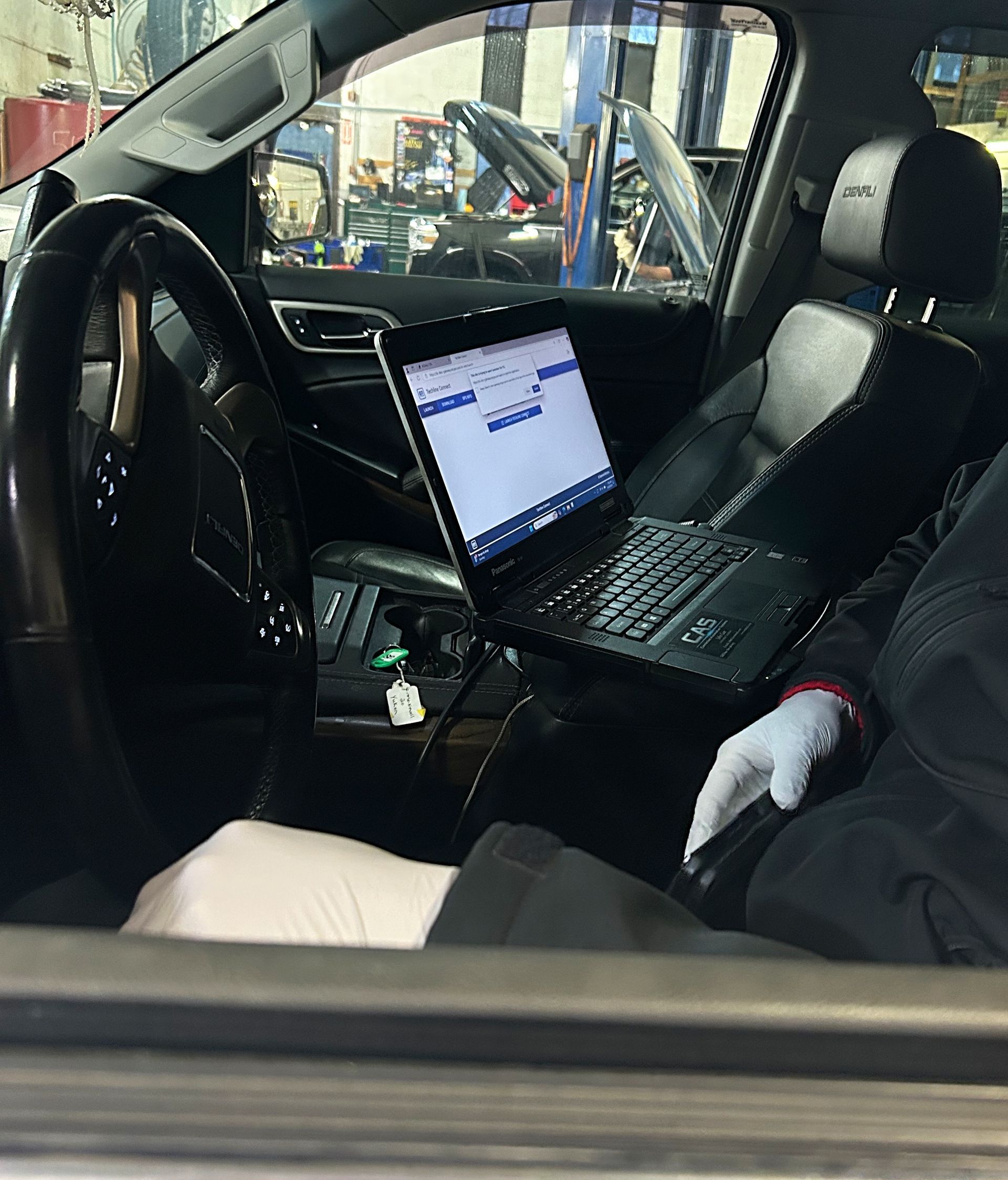
A professional diagnostic scan tool with appropriate vehicle coverage can communicate with many additional control modules.
Depending on the vehicle and equipment, a more comprehensive scan may provide information about:
- Engine and transmission systems
- ABS and stability control
- Airbags and occupant safety systems
- Steering and suspension electronics
- Body control modules
- Heating and air conditioning systems
- Camera and radar-based driver-assistance systems
- Communication between electronic control modules
A comprehensive scan can help identify stored faults and direct further testing.
However, even the most advanced scan tool does not automatically identify the actual cause of every problem.
The scan provides information. The technician provides the diagnosis.
Why a Trouble Code Doesn't Tell You Which Part to Replace
Let's say your vehicle develops a problem with an engine sensor.
A diagnostic scan identifies a trouble code associated with that sensor's circuit.
Does that mean the sensor needs to be replaced?
Not necessarily.
The actual cause might be:
- A failed sensor
- Damaged or corroded wiring
- A poor electrical connection
- A problem with voltage supply or grounding
- A mechanical condition affecting the sensor's readings
- A communication or control module problem
Replacing the sensor without testing may not correct the issue.
At Next Gen Auto Care, our diagnostic approach focuses on understanding why the problem exists, rather than simply replacing whatever component appears in a trouble code description.
That may involve reviewing manufacturer service information, evaluating live sensor data, performing electrical testing, or checking related mechanical systems.
The goal is to make repair recommendations based on evidence.
What Happens When Your Car's Computers Stop Communicating?
Your vehicle's control modules communicate through electronic networks.
Think of them as a team of specialists that constantly exchange information.
The engine computer may share information with the transmission controller. The ABS module may provide wheel-speed information used by stability control or other systems. Driver-assistance systems may depend on information from steering, braking, and camera or radar modules.
When communication is interrupted, the vehicle may develop unusual symptoms.
For example:
- Multiple warning lights may illuminate simultaneously.
- Certain safety or convenience features may stop functioning.
- The vehicle may experience intermittent electrical problems.
- Systems may operate in a reduced-function mode.
- A technician may be unable to communicate with one or more control modules.
Sometimes the cause is a failed component. Other times it is damaged wiring, a poor connection, a power supply concern, or a network communication issue.
Because the systems are interconnected, diagnosing the problem requires an understanding of how the entire vehicle operates.
Why Modern Vehicle Safety Systems Require Specialized Knowledge
Many newer vehicles have Advanced Driver Assistance Systems, commonly called ADAS.
These systems may include:
- Automatic Emergency Braking
- Forward Collision Warning
- Adaptive Cruise Control
- Lane Departure Warning
- Lane-Keeping Assistance
- Blind-Spot Monitoring
- Rear Cross-Traffic Alert
ADAS systems rely on cameras, radar sensors, electronic control modules, and precise information about vehicle movement.
Some repairs or adjustments, including certain windshield replacements, collision repairs, sensor replacements, and wheel alignments, may require calibration or additional verification under manufacturer procedures.
An improperly calibrated system may not perform as intended.
At Next Gen Auto Care, we've been performing ADAS calibrations since 2018 and have invested in the equipment and technician knowledge needed to service these increasingly sophisticated systems.
Modern automotive repair is no longer just mechanical. It combines mechanical expertise, electronics, software, and precise testing.
Does a Computer Scan Replace a Physical Vehicle Inspection?
No. A computer scan and a physical inspection provide different information, and both can be valuable.
A scan tool may identify a stored fault in an electronic system, but it cannot measure tire tread depth, determine brake pad thickness, identify every fluid leak, or visually evaluate the condition of worn suspension components.
Likewise, a visual inspection alone cannot reveal all the information stored within a vehicle's electronic modules.
That's why Next Gen Auto Care takes a more complete approach to understanding a vehicle's condition.
Our Comprehensive Vehicle Safety & Maintenance Evaluation combines a physical vehicle inspection with an electronic system scan, maintenance history review, and documentation of relevant findings.
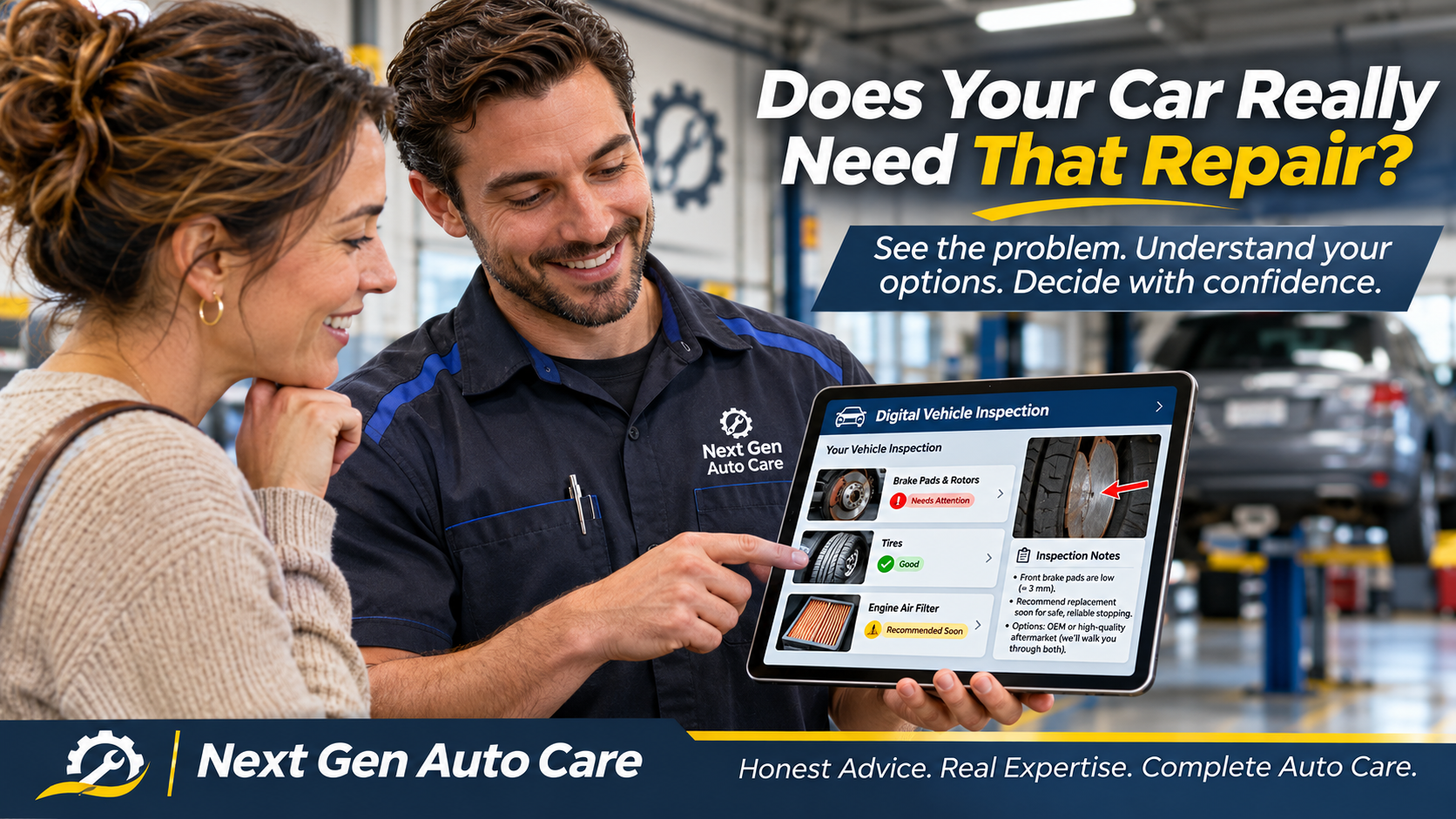
Our digital vehicle inspections allow us to share photographs and information so customers can better understand recommendations.
The result is a clearer picture of the vehicle's overall condition.
Does Every Stored Computer Code Need to Be Repaired?
No, and this is an important distinction.
A professional scan may reveal codes that are current, pending, intermittent, or historical.
For example, a low battery may cause several modules to record voltage-related faults. Those stored codes don't necessarily mean each module has failed.
A qualified technician must evaluate the circumstances, determine whether the fault is still present, and decide whether additional testing is appropriate.
At Next Gen Auto Care, we believe customers deserve to know the difference between:
Safety concerns: Problems that may compromise safe vehicle operation and deserve prompt attention.
Current operating problems: Conditions affecting reliability, performance, or functionality that should be diagnosed.
Maintenance needs: Services based on manufacturer schedules, vehicle age, mileage, condition, and operating environment.
Items to monitor: Conditions that don't necessarily require immediate repair but deserve documentation and future attention.
Finding a code isn't the same as finding a problem that needs an expensive repair.
Our responsibility is to explain the difference.
Why Advanced Diagnostics Matter When Choosing an Auto Repair Shop
Today's vehicles require technicians who understand both traditional mechanical systems and modern electronic technology.
Effective diagnostics may require professional scan tools, electrical testing equipment, oscilloscopes, manufacturer service procedures, and ongoing technical training.
But equipment alone isn't enough.
The real value comes from knowing how to interpret the information and use it to make sound repair decisions.
At Next Gen Auto Care, our team uses advanced diagnostic equipment, OE-level service information, and established testing procedures to evaluate a wide range of vehicle concerns.
Whether you're dealing with an intermittent warning light, an unusual electrical problem, a communication fault, or an advanced safety system concern, our goal is to identify the cause and explain your options.
Because the right diagnosis is often the most important part of the repair.
Frequently Asked Questions About Vehicle Computer Diagnostics
Can my car have problems even if there are no dashboard warning lights?
Yes. Certain electronic system faults may be stored without triggering a dashboard warning. A comprehensive vehicle scan can identify many of these stored faults, although additional testing may be necessary to determine whether they represent current problems.
What is a full-system vehicle scan?
A full-system scan uses compatible diagnostic equipment to communicate with multiple electronic control modules throughout the vehicle, rather than checking only standardized engine and emissions information. Available coverage varies by vehicle and scan tool.
Does a computer scan tell a mechanic exactly what's wrong?
Not always. Diagnostic trouble codes identify detected conditions or system problems. Technicians must interpret those codes and may need to perform additional testing to determine the actual cause.
Can an independent repair shop diagnose modern vehicle computers?
Yes. Properly equipped independent repair facilities can diagnose and service many sophisticated electronic systems, including engine management, transmission controls, electronic safety systems, and ADAS. Some operations require manufacturer-specific equipment, software, or authorization.
Do I need a computer scan if my car is running fine?
Not necessarily as a standalone service. However, an electronic scan can be a useful part of a comprehensive vehicle evaluation, especially when investigating intermittent concerns, assessing certain used vehicles, or verifying repairs.
Where can I get advanced vehicle diagnostics near Londonderry, NH?
Next Gen Auto Care provides professional automotive diagnostics, electronic system evaluations, electrical troubleshooting, module programming, and ADAS services in Londonderry, New Hampshire.
We serve drivers from Londonderry, Derry, Chester, Windham, Manchester, and surrounding communities.
Modern Vehicles Need Modern Expertise
The next time you start your vehicle, remember that dozens of electronic systems may be working together behind the scenes.
You don't have to understand all those computers.
But you should have confidence that the people servicing your vehicle do.
At Next Gen Auto Care, we combine modern diagnostic technology with experienced technicians and a commitment to helping customers understand their vehicles.
We don't believe in replacing parts based on guesses, recommending unnecessary repairs, or assuming that no warning light means everything is fine.
We believe in asking the right questions, performing appropriate testing, and providing clear recommendations.
Next Gen Auto Care — Londonderry, NH
Serving Londonderry, Derry, Chester, Windham, Manchester, and surrounding New Hampshire communities.
Honest Advice. Real Expertise. Complete Auto Care.
Have a warning light, intermittent electrical concern, or question about your vehicle's electronic systems?
Schedule a diagnostic appointment at Next Gen Auto Care.
Call (603) 434-2730 or visit www.nextgenautocare.com.